This post provides tips on packing and finding the moving company when relocating to Spain. When I look back I think packing was one of the hardest things we had to do. We had lived in our house for 9 years and by then we had accumulated a collection of many objects, gadgets and possessions. However, I was glad as it gave us a chance to look through everything and decide what was worth keeping and what could go. Everyone’s house is different but in my case the only things that got sorted out on a regular basis were children’ s clothes and toys. As the girls grew I would get rid of the clothes that were too small and toys they stopped playing with.
What you need to start packing
The research done by Idealista suggests that an average family of three moving from a two-bedroom, 75-square-meter home will need 43 boxes in total: 9 large, 19 medium, and 15 small. This means that all of them together will have a total volume of 8.3 cubic meters. The information about the volume will be useful later when you will be booking the moving company. However, the total amount of boxes will also depend on the fact how long you had lived in your property as people who lived there longer tend to gather more possessions. Before you start packing you should have all the materials ready: boxes of various sizes, newspaper, bubble wrap, wide tape and permanent marker. You can get a whole moving set on different websites. We saved a lot of money by going to the supermarkets like Aldi and Tesco and asking for the boxes. We also used plastic boxes with lids for children’s toys and vacuum bags for clothes.
Packing order
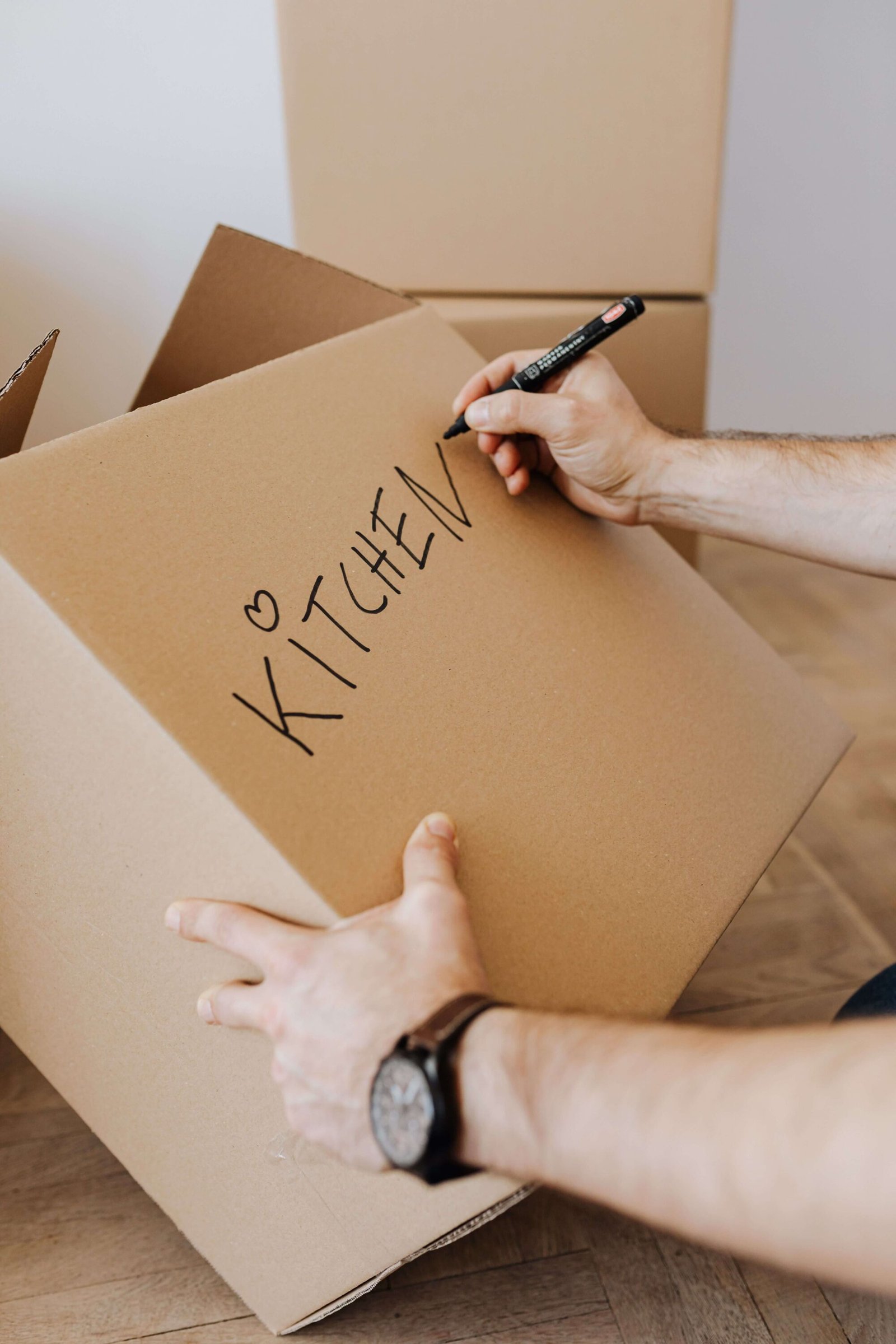
It is recommended to start packing from the rooms that contain objects that are least used like storage, living rooms, garages. Kitchen, bathrooms and bedrooms should be left till the end. When did we really start packing? I think the first ornaments and decorations were packed by my mum when she was visiting us in January. She knew that we needed to start somewhere. As we both were working full time the only time we had spare was during the evening when the girls went to sleep. So once the school places were confirmed we were packing almost everyday. For safety reasons and to avoid breakages of the boxes it is wise to pack books, photo albums, plates, tools and heavy objects in the small boxes. The medium boxes can be used for small appliances, toys, decorative objects and kitchenware wrapped in bubble wrap.The biggest boxes should be saved for bulky but lightweight items like clothes, pillows, duvets, blankets or stuffed toys. As mentioned above, we had decided to use plastic boxes with lids for the children’s toys because they fit nicely piled in the girls bedroom which for now saved us the expense of buying storage units. We have a system now that the girls tell us which box they want to play with and once they’ve finished, the box is tidied away. You have to be aware though that plastic boxes are not very sturdy and some lids broke. We also used vacuum bags for clothes as again they save space and you can see what type of clothes they contain. However, many bags were ripped open during the transport and we could see that the moving company used cellotape to keep them together. It is very important and useful later on if all the boxes are clearly labelled with the room and objects they contain. This really sped up the unloading process and the moving staff just carried our boxes to the rooms according to the labels.
Booking the moving company
We booked our ferry from Dover to Calais for the 24th July so this was the day we would be driving from the UK to Spain. Therefore we were looking to book the moving company on the 23rd July. We researched many companies and compared the quotes. When asking about the estimated price, you have to provide the volume of your load. It was really difficult to estimate, but I just gave the rough amount of the cardboard boxes, plastic boxes, clothes bags and then added the beds, wardrobes, TV and bikes. Our quotation was based on 17.5 cubic metres, door to door service including customs clearance with onward delivery through to residence. Our quotation was for £3,000. In their confirmation email they had added that if on the collection day the volume is more / increases the booked amount the additional fee will be charged on a pro-rata basis at £4.91 a foot, this will be charged once the goods have all been loaded and measured back at the warehouse.
How to find the right moving company for you? As we were moving from the UK to Spain we had to prioritize the providers that handle post-Brexit customs paperwork, offer tailored goods-in-transit insurance and avoid heavy subcontracting. The essential factors to look for during your search:
- Customs Clearance Expertise. This would mean creating the required comprehensive inventory list and managing import paperwork.
- Full “Goods in Transit” Insurance. You should request a comprehensive GIT insurance that covers your belongings for their full value.
- Transparent Services and Direct Fleet. You should check with them if they offer a dedicated load or a part-load/shared container, if they use their own company and staff in both countries or if they sub-contract and finally if the access conditions to your new home would require extra fees.
- Local connections and Accreditations. Look for companies belonging to recognized bodies as they enforce strict operational standards. It is recommended to use a company serving your local area.
- Checklist Best Practices. You should try to get at least three direct, itemized quotes to compare what is and isn’t included. It would be helpful if the moving company representatives conduct a pre-move survey so they accurately measure your shipment’s volume and weight.
Packing and arranging transport can be daunting and you can make a mistake of putting it off thinking that it will go quickly and smoothly. I would highly recommend starting the process early, especially if you have a full time job like we did. You most probably will underestimate the amount of objects and materials you have gathered in your property and you will be surprised by how quickly the boxes add up. Start collecting boxes early and don’t be shy to ask for them in the supermarkets. I cannot stress enough how important it is to label all the boxes and how helpful it will be in your first days in your new home. Get a few quotes from different moving companies as the prices vary greatly. But make sure what is included. In our case we had to pay surcharges as La Eliana has narrow streets and the company had to use different vehicles to deliver our items. We hope this post provided you with some helpful tips on packing and finding the moving company when relocating to Spain.
At Litora we are always happy to assist and advise in this process.