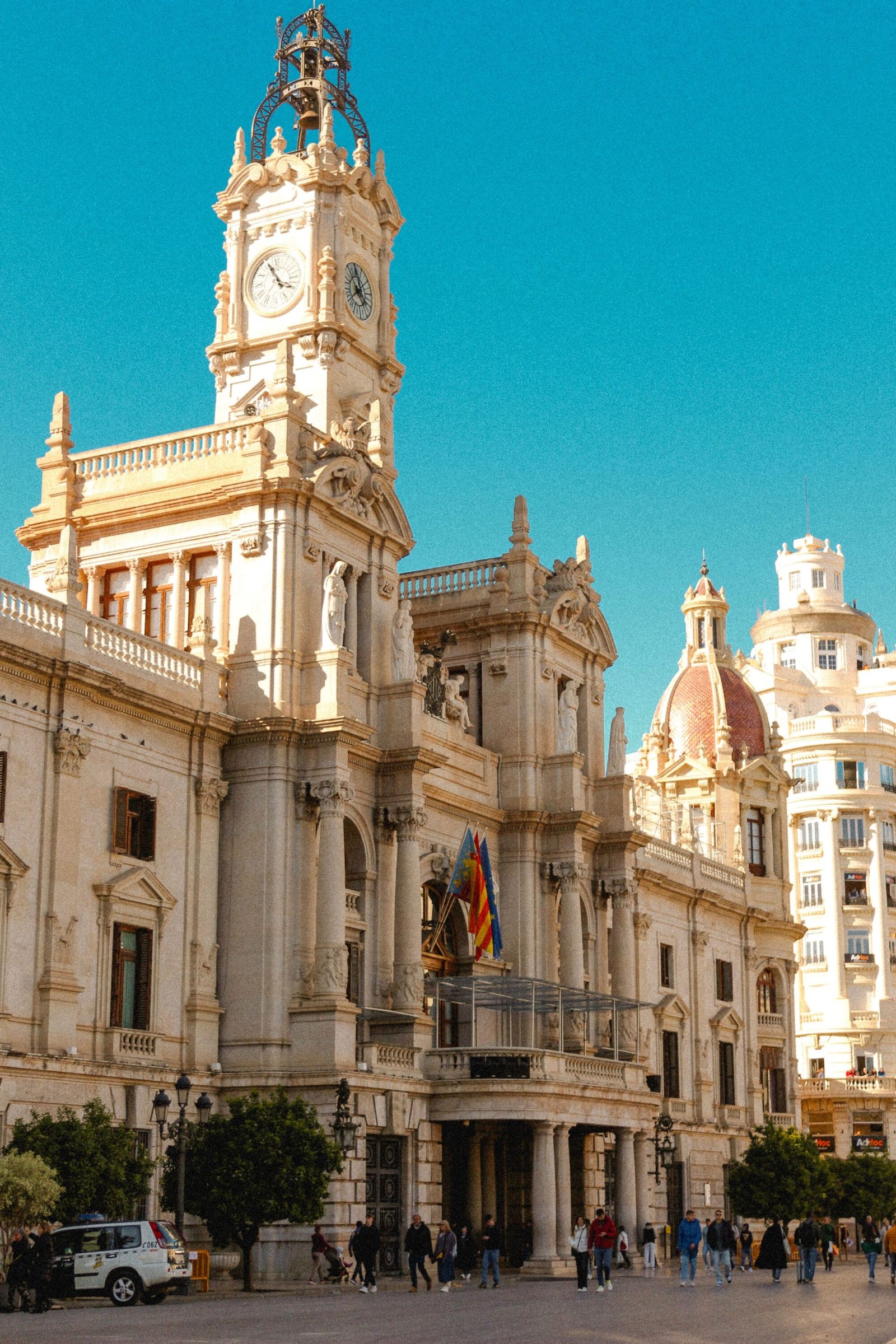
The first days in Spain after relocating are remembered by us with a mixture of relief that the hard part was done, excitement of beginning a new chapter, and relaxation but also with a bit of uncertainty. We were staying in temporary accommodation which was really comfortable with access to a communal pool so we could properly relax and catch a breath before we tended to more urgent matters.
Empadronamiento
One of the most important things we had to sort out was the Empadronamiento (or Padron). Our moving company requested this for customs and VAT exemption. Since the UK is no longer in the EU, your belongings are subject to import taxes, unless you can prove that you are officially relocating your primary residence to Spain. Empadronamiento is the official registration of your residence with the local town hall (ayuntamiento). Being on the municipal register allows you to access several services such as:
- Enrolling children to public school
- Enrolling in Spain’s public healthcare system
- Applying for social security number
- Applying for residency permits or NIE numbers
- Registering to vote in local elections.
To obtain the certificate we visited the Ayuntamiento in La Eliana and simply drew an appointment ticket. We were seen within 15 minutes of arriving. We were lucky as La Eliana has a small town hall and normally most of the matters you can sort out the same day. However, the process depends on your municipality and in many big cities like Barcelona or Madrid you need to book an appointment online in advance. We asked for the Empadronamiento Collectivo which would include all family members. My husband and I had to provide proof of identity (passports were sufficient). For my daughters as well as their passports we had to show their birth certificates. You also need to complete a form called Solicitud de Empadronamiento.
The other document you have to show is the proof of residence. We brought our rental contract but a recent utility bill or property deed are also accepted. It is worth remembering that the Padron is valid for 3 months and it needs to be renewed. When renewing, you don’t have to provide all the documents all over again if the residence address hasn’t changed.
Spanish Bank Account
After obtaining Padron, the next step was to the local bank. We chose Santander as the branch is nearby and this is the largest bank in Spain with vast international operations, but other big and popular choices are: BBVA, CaixaBank, Banco Sabadell and Bankinter. I was able to open a Resident Account as I already had my NIE number and I had my Polish passport. The resident account offers lower fees, better credit options and full banking features. To open the account you will need:
- Valid passport or national ID card
- NIE number
- TIE card (Foreign Identity Card) or EU Registration Certificate
- Proof of address
- Proof of income
We managed to get the bank account open the same day. We were told that to activate the account we need to transfer 300 euros the same day and if we want to avoid fees, we will need to have a minimum of 600 euros coming into the account on a monthly basis. One piece of advice would be to use your NIE number as a future main identity document for your account. I had used my Polish passport and had to change it later to NIE as I wasn’t able to make online payments on the official Spanish sites (but I will talk about it in a different post about changing the driving licence).
Spanish Ways
It is worth noting that many official offices and departments like Ayuntamiento, banks, utility offices are open until 1 or 2pm so if you need something sorted urgently, make it a morning appointment. Here it is a good place to mention the famous siesta. Be aware that other stores and offices close between 2pm and 5pm and the streets become empty. In La Eliana the only places that stay open are local supermarkets like Mercadona and Consum. I found it quite refreshing to walk into the stores at that time as there is literally no one there. The restaurants, cafes and bars also close. Most of them will re-open from 7-8pm but you won’t get served food till at least 8pm. On Sundays and Bank Holidays the supermarkets, stores, offices are all closed. Don’t forget to stock up on groceries on Saturday, otherwise you will need to dine out.
Now about the language. Be ready to start practicing your Spanish from day one when you arrive here. Spaniards don’t speak or don’t want to speak English. This is a great way of picking up Spanish quickly, although it can be frustrating at times. On the other hand, they are very patient and understanding and will wait to hear what I have to say. By trying to speak Spanish I have made many friends here and it helps with blending into a local community.
Unpleasant Discoveries
Although the first days in Spain after relocating were pretty exciting, not all things were rosy and smooth. It is quite difficult to get used to the heat. We were aware that we were moving in the hottest months of the year but it still was difficult. It is challenging to do anything in this heat, maybe that’s why when August comes everything shuts down and Spaniards escape to the cooler regions or to their beach holiday homes. You can’t avoid using AC which can top up your electricity bills pretty quickly.
And then at night the army of mosquitos start their offence. If you dream about chilling on the terrace in the pleasant warmth of the evening, you need a mosquito repellent and the lemon candles around you. Otherwise the next day you won’t be able to find the part of your body that hasn’t been bitten.
The other very unpleasant surprise was found one evening in the kitchen after we watched a film. A massive cockroach was jumping and flying all over and it was impossible to catch. We managed to corner it and get in the jar as they shouldn’t get squashed on the floor. Cockroaches are a massive problem in Spain, especially in the big cities and it is difficult to avoid having them. We bought a poison and spread it in the places we thought they were coming from and now we wake up often to find a dead or dying one in the kitchen.
The last thing that keeps bothering us is the unpleasant smell coming from the drains. The smell is very characteristic to the streets of Valencia so it is not only our apartment block. I have read that odors often occur on hot days due to the city’s low elevation and an older sewage system. In Valencia hot summer days lead to rising temperatures in pipes, accelerating organic breakdown. Low air pressure or humid sea breezes can also push sewer gases upwards.
As you can see the first days in Spain were quite eventful. We got exposed to the Spanish ways from Day 1, meaning we quickly started feeling more at home rather than on holidays. This helped us with assimilation as we started learning quickly how things are done here. Obviously, there were some unpleasant surprises as well but like with everything, you just need to find ways of dealing with them.